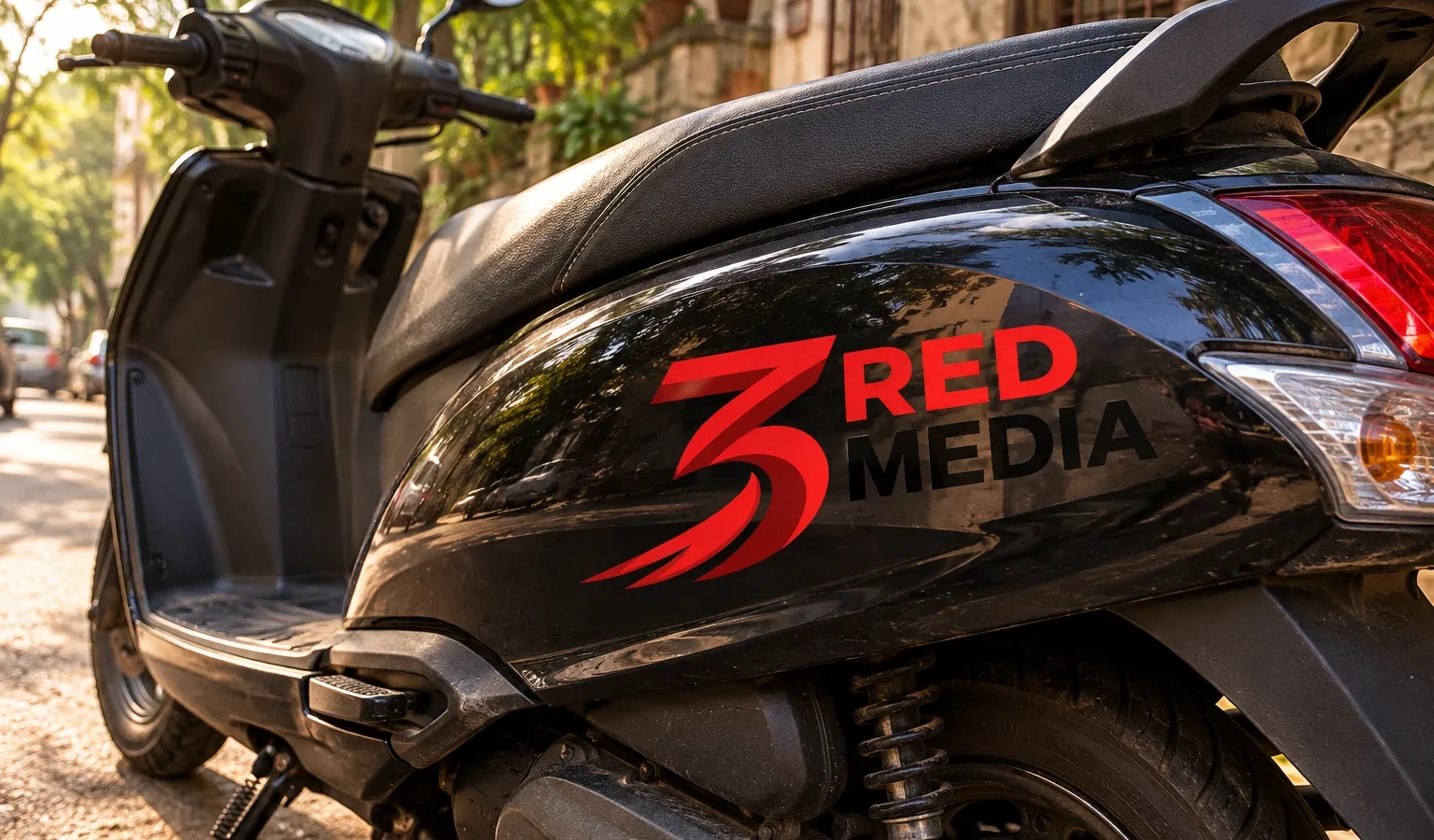
Vinyl stickers for bikes last when three things are right: outdoor-grade vinyl, a laminate over the print, and a clean, dry panel at fitting. Paper stickers give up in the first monsoon, while laminated vinyl can take sun, rain and regular washing for several years on a sheltered panel. On factory paint in good condition, a vinyl sticker also comes off later with gentle heat.
A bike is harder on a sticker than a wall or a laptop is. It gets engine heat, petrol drips, chain spray, mud, pressure-washer jets at service stations and tight curves. Each part of the bike asks for a slightly different sticker.
Which vinyl stickers for bikes last in Pune sun and rain?
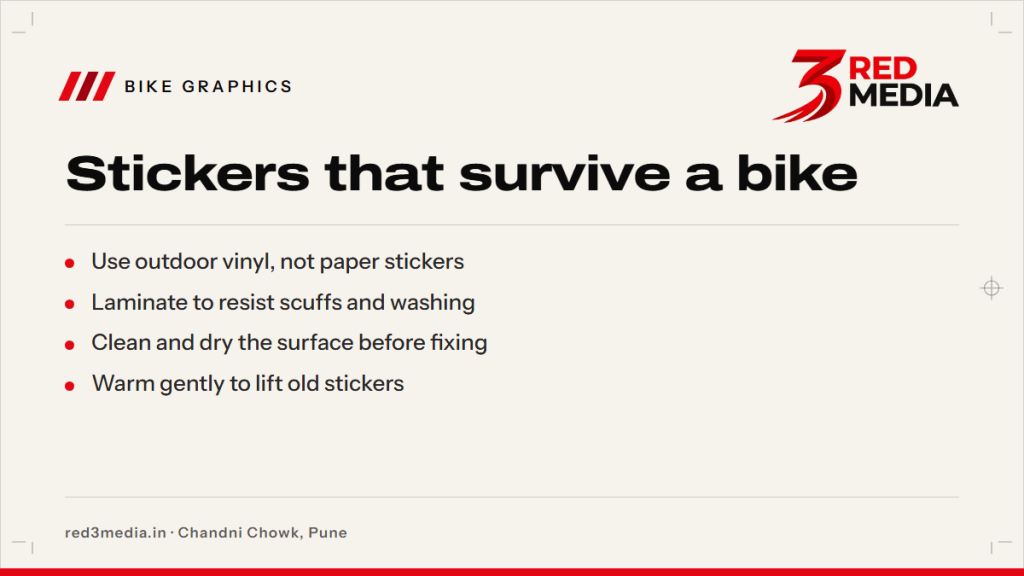
Look for stickers printed on outdoor vinyl and laminated before cutting, so the clear film seals the edge. The film itself is waterproof, but waterproof does not mean fuel-proof, heat-proof or jet-proof, and the laminate is what protects the ink. Gloss deepens colour, and matt cuts glare. Standard vinyl copes with flat and gently curved panels. A deep curve, such as a tank shoulder or a fairing edge, wants a softer film made to stretch, so say where the sticker will go.
Keep vinyl away from the exhaust and the silencer shield, since that metal runs hot enough to blister film. Reflective film for night riding is a different material, so ask for it by name.
Can I put vinyl stickers on a bike tank without damaging paint?
On original paint in good condition, yes, and the sticker usually peels off later with gentle heat. Trouble comes from the paint, not the sticker. A repainted tank, chipped lacquer or paint only a few weeks old can lift with the sticker, and matt paint is delicate, so test a small hidden patch first.
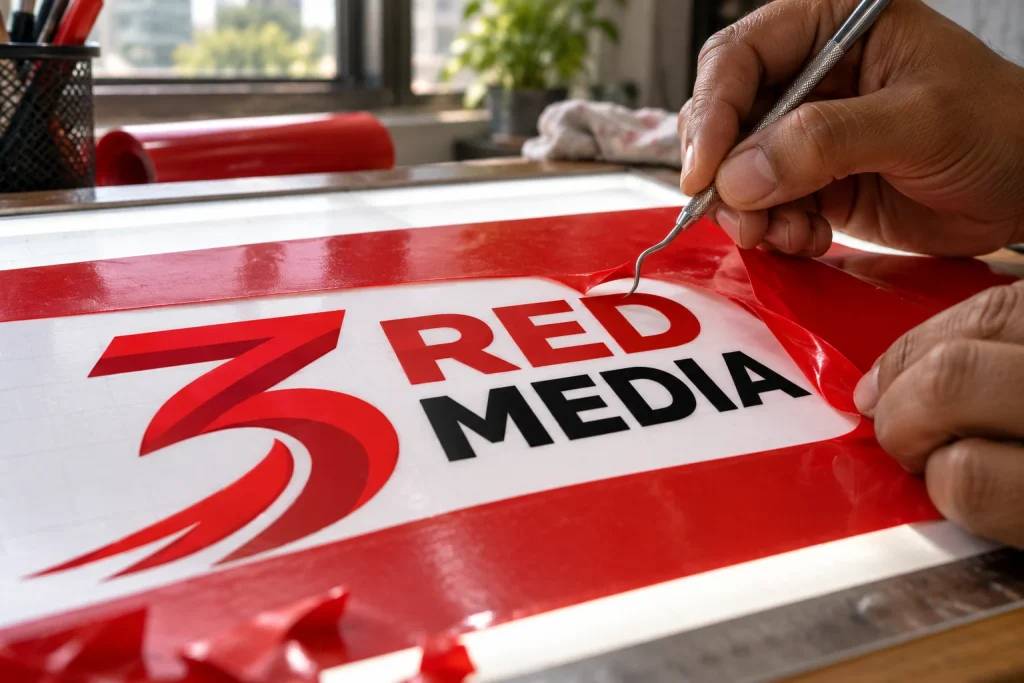
Petrol is the other enemy. Drips at the filler cap soften edges and stain ink, so keep the sticker a finger-width clear of the cap, laminate it and wipe spills straight away.
What size stickers suit a mudguard, helmet or frame?
Stock bike and helmet stickers usually run from 3 to 12 inches. Cut a paper template, tape it to the bike and photograph it from the side, because a shape that looks fine flat can look huge on a curve.
| Part | What works | Watch out |
|---|---|---|
| Tank sides | One or two pieces kept off the deep curve | Fuel drips at the cap |
| Front mudguard | A strip or a small logo | Stone chips; the number plate if it sits here |
| Side panels | A larger logo or name | Plastic that flexes with heat |
| Helmet | Palm-sized or smaller, lying flat | The shell material |
| Frame and forks | Thin strips or small text | Chain lube and cleaning wipes |
Keep every sticker off the number plate, indicators and lights. Rule 50 of the Central Motor Vehicles Rules requires the registration mark to be displayed clearly and legibly, and on a motorcycle the front mark may sit on the mudguard.
Some helmet makers warn that adhesives and solvents can weaken the shell plastic. Read the manual or ask the maker before sticking anything on, and never cover its labels or vents.
Do bike stickers need lamination?
Outdoors, yes. Unlaminated ink scuffs under a cloth, softens under petrol and fades faster in Pune’s sun. A clear laminate takes the wear, and cutting the sheet after lamination seals the edge so water cannot creep under it. A sticker that lives indoors on a dry surface can skip it. The vinyl sticker printing page lists sizes and finishes, and the vinyl durability guide explains what shortens outdoor life.
How do I apply bike stickers without bubbles?
- Park in shade with the engine and exhaust cold. A hot panel makes the adhesive grab before you have the sticker level.
- Wash and dry the panel, then wipe it with isopropyl alcohol mixed half and half with water to lift wax and oil. Try it on a hidden spot first if the paint is matt.
- Hold the sticker in place with a strip of masking tape across its top edge, and step back to check it is level.
- Peel the backing down in stages and press from the middle outwards with a squeegee or a soft card.
- On curves, warm the film gently with a hair dryer so it settles, and never stretch it until the colours thin.
- Lift any transfer sheet slowly and flat to the panel, and press a stubborn corner back down.
- Leave it dry for a day or two before washing, and keep jets away from the edges.
How do I remove old bike stickers cleanly?
Warm the sticker with a hair dryer on low until it is warm to the touch, lift a corner with a plastic card and peel slowly at a low angle, warming again whenever it resists. Rub leftover glue off with a cloth dampened with isopropyl alcohol or soapy water, and keep petrol, thinner and metal blades away from paint and plastic. On older bikes expect a ghost outline: the paint under a sticker keeps its shine while the rest fades in the sun, and a polish usually softens the line.
3 Red Media prints and cuts bike stickers at its Chandni Chowk unit in Pune. A fleet of delivery bikes carrying one logo falls under vehicle branding, and a tank-to-tail graphics set is closer to a car and bike wrap. Send photos of the panels, the sizes and the finish through the quote form.