What is vinyl material? It is a flexible plastic film, usually made from PVC, that can be printed or cut for signs, stickers, labels and surface graphics. The right type depends on the surface, the design and where it will be used.
At 3 Red Media, we print vinyl for customer-supplied sizes and designs, then share a digital proof for approval before printing. Our print unit is at Chandni Chowk, Pune, and we deliver across Pune and PCMC, with courier delivery elsewhere in India and the courier charge added to the quote.
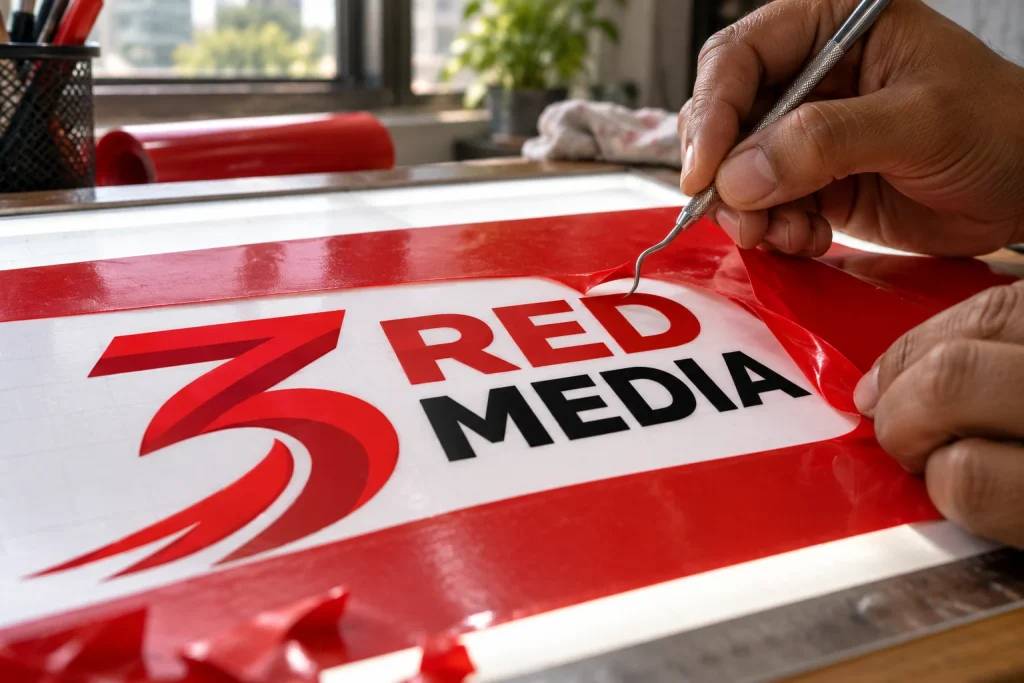
What is vinyl material?
Vinyl is the everyday name for a family of materials based on polyvinyl chloride, commonly shortened to PVC. In printing, people usually mean a thin, flexible PVC film supplied in rolls or sheets. It can have a plain colour, a clear finish, a surface texture or a printable face.
The word can refer to different products, so it helps to be specific when asking for a quote. A self-adhesive vinyl sticker has a glue layer; a flexible banner material is a different product, even if people casually call both vinyl. Tell the printer what surface you want to cover and whether the graphic needs to be printed or cut.
Vinyl material meaning can also depend on the job. A small product label, a shop sign, a wall graphic and a vehicle graphic have different sizes and conditions. Share the size in feet and inches, the final surface, and whether it will be indoors or outdoors so the material can be discussed clearly.
What is vinyl made of: PVC, plasticisers and additives?
PVC is the base plastic. Makers can combine it with plasticisers to make the film more flexible, along with stabilisers, pigments and other additives that affect how it behaves and looks. The exact formulation varies by product and supplier.
A flexible film is easier to handle around flat surfaces and gentle curves than a rigid sheet. Additives and surface coatings can influence flexibility, colour, print reception and resistance to exposure. Those details are product-specific, so do not assume that every roll called vinyl has the same construction or is suitable for every job.
The term pvc vinyl is often used to distinguish PVC film from other materials, but it does not identify a particular grade. If your use has special requirements, such as contact with a certain surface or long outdoor exposure, describe those requirements when requesting a quote. Ask for product details if they are needed for your decision.
What is self-adhesive vinyl?
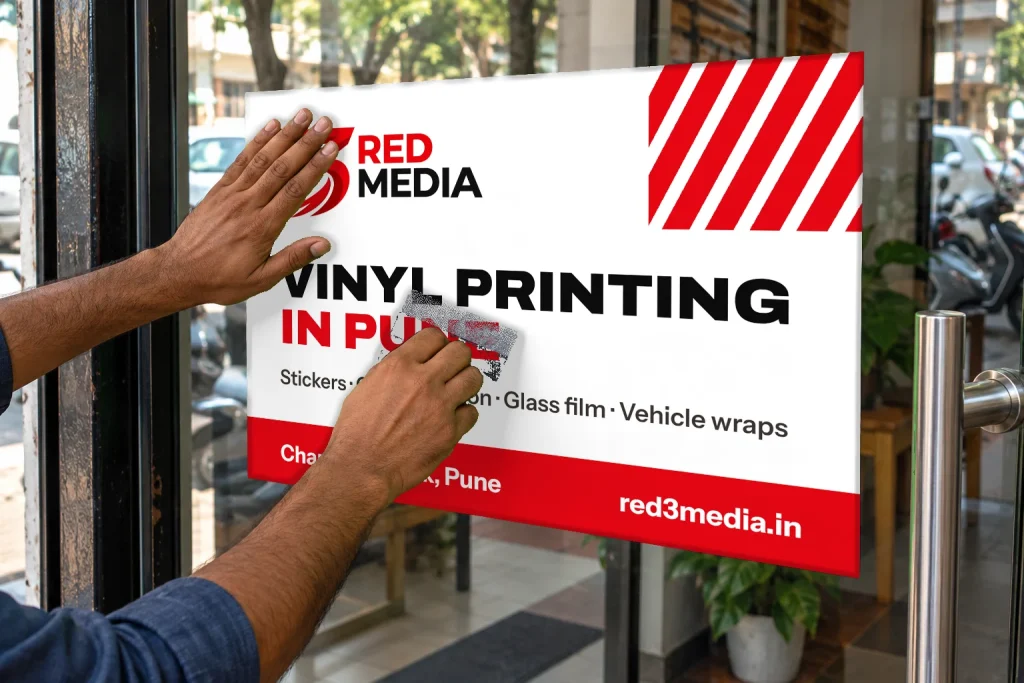
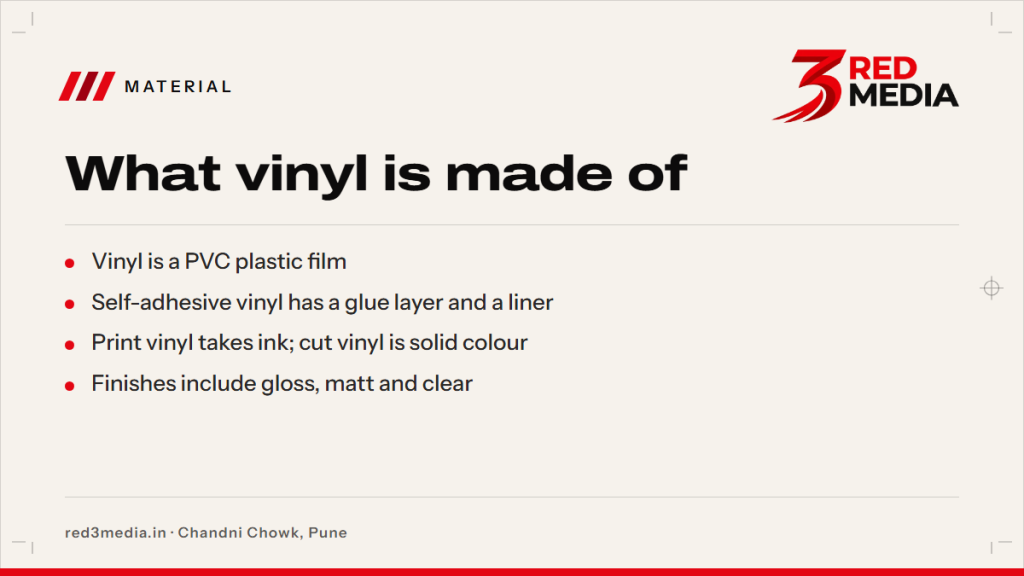
Self-adhesive vinyl is a film with a pressure-sensitive glue layer on one side. A paper or plastic liner covers the adhesive until application. The liner is peeled away, and the film is positioned on a clean surface and pressed down.
The adhesive is designed to stick when pressure is applied, but results depend on the surface and application. Dust, oil, moisture, rough texture or a freshly painted surface can affect adhesion. Curves, corners and joints also need care. For a large graphic or a difficult surface, ask whether installation can be arranged when you send the size.
A vinyl sheet material may be supplied with adhesive or without it. This is one reason to describe the job instead of asking only for “vinyl.” A flat indoor label and an outdoor sign panel may need different products. If you are comparing options, our guide to how vinyl printing works explains how a design is put onto a film.
What is the difference between print vinyl and cutting vinyl?
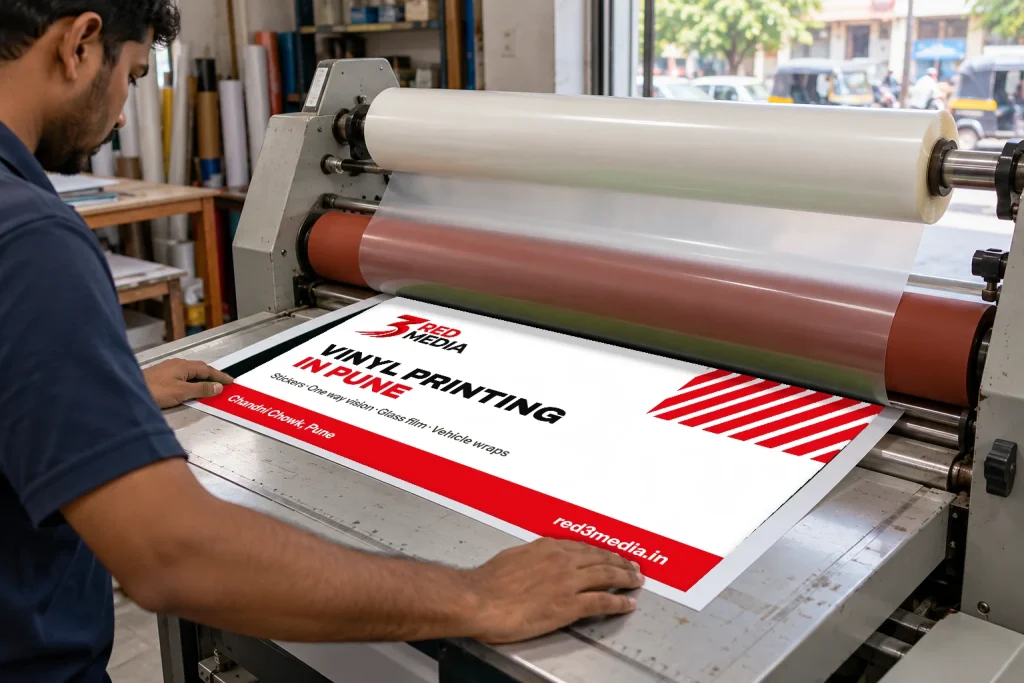
Print vinyl has a surface that can receive a printed design. It is useful when artwork contains photographs, gradients, several colours or small details. We print the approved design on the selected film, then prepare it to the requested size and shape where the job allows.
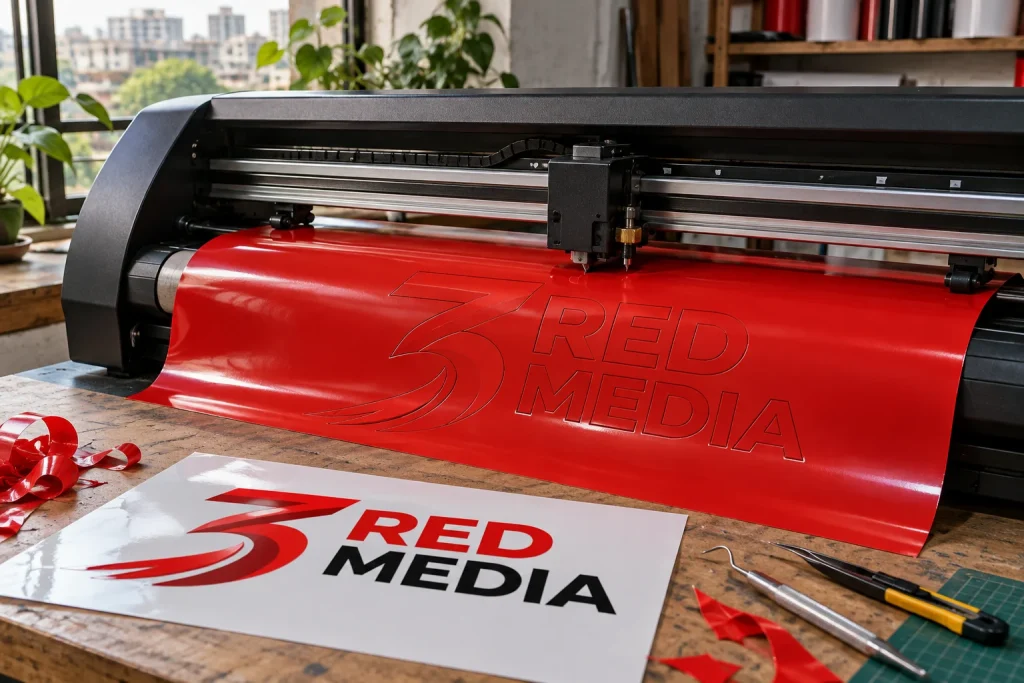
Cutting vinyl is usually a solid-colour film. A plotter cuts shapes or letters from the film, and excess material is removed around the design. It is useful for simple lettering, symbols or blocks of colour. Because the colour comes from the film itself, it is not the same process as printing a multicolour image.
The choice comes down to the artwork and the finish you want. A detailed illustration generally calls for print; one-colour lettering may be suitable for cut vinyl. Share the artwork or a clear reference and the intended size. For help preparing a file, see how to send artwork for printing.
For a quote on a printed application, include the surface and quantity as well as the size. If you are looking at local service options, our vinyl printing in Pune page covers the kinds of jobs customers commonly ask us to print. Fabrication, electrical work or installation can be arranged when you send the size.
What is the difference between glossy, matt and clear vinyl?
Gloss vinyl reflects more light and can make colours look bright. It is common for graphics that need a shiny finish, though reflections can make text harder to read from some angles. The placement and lighting matter, particularly on a shopfront or vehicle.
Matt vinyl has a less reflective surface. It can suit indoor graphics, lettering and signs where glare is a concern. Clear vinyl lets the surface beneath show through in areas without printed colour, depending on the film and the artwork. Ask us whether a specific clear film can be arranged if your job depends on that effect.
Finish names do not tell the whole story. The face, adhesive, film thickness and intended use vary across products. When comparing samples or discussing a job, check the visible finish in the light where the graphic will be placed. For glass, also consider visibility from inside and outside.
Is vinyl waterproof, and does it fade?
Vinyl film itself generally handles splashes and damp conditions better than paper, but that does not mean every printed vinyl job is waterproof in every situation. Water can reach edges, seams or the surface beneath, and cleaning methods can affect the graphic. Ask about the specific film and how it should be cleaned.
Colour can change with exposure to sunlight and weather. Outdoor conditions, direction of the sun, surface preparation and product choice all affect how a graphic holds up. In Pune, a west-facing glass panel may get harsh afternoon sun. Monsoon rain from June to September can also expose outdoor graphics to repeated wetting.
There is no single lifespan that applies to all vinyl. Placement, exposure, film and care all matter, so avoid treating a general estimate as a promise. Our guide to vinyl lifespan explains the factors to consider. Tell us if the job is indoors, outdoors, on glass or on a vehicle so we can discuss a suitable option.
What are the most common uses of vinyl in India?
In shops and offices, printed or cut vinyl is used for labels, window graphics, wall graphics, wallpaper, lettering and signs on panels. Customers also ask for one way vision and frosted glass film. Vehicle graphics and wraps are another use, where the curves and condition of the vehicle surface need to be considered.
For a sign panel, vinyl can be applied to a suitable board. We print the vinyl; if fabrication, electrical work or installation is needed, it can be arranged when you send the size. For outdoor display work, check with your ward office about any local permissions that may apply. Requirements can vary by location and situation.
Flex printing is another option for certain banners and display jobs, but it is a different material from adhesive vinyl. Share what you are making, where it will go and how it will be fixed. Our page about the vinyl printing process and equipment gives more context on how a print job is produced.
| Job or use | Typical vinyl approach | What to share for a quote |
|---|---|---|
| Product or shop stickers | Printed adhesive vinyl, shaped to the artwork | Finished width and height, quantity, surface |
| Window lettering | Cut solid-colour vinyl or printed film | Glass size, placement and viewing direction |
| Wall graphic | Printed adhesive film suited to the wall surface | Wall width and height, wall condition, indoor or outdoor use |
| Vehicle branding | Printed film or cut vinyl depending on the design | Vehicle panels, approximate sizes, artwork and surface condition |
| Sign panel graphic | Printed vinyl applied to a suitable panel | Panel size, location and whether fabrication or installation is needed |
How do I choose the right vinyl for my job?
Start with the surface, the location and the design. Note whether the graphic goes on glass, a wall, a vehicle or a sign panel, and whether it will be indoors or outdoors. Give the finished size in feet and inches, plus the quantity and any special shape.
Send your design with those details. We will review the job, share a quote and provide a digital proof. Printing begins only after you approve the proof. This gives you a chance to check the wording, layout, size and colours shown in the proof before the job goes to print.
If the design is not ready, send a reference and explain what the graphic needs to say or show. Keep important text and logos clear in the artwork. Ask about material options if the surface is unusual or exposure is a concern. For delivery outside Pune and PCMC, the courier charge is added to the quote.
To request a quote, send the size, design, quantity and where the vinyl will be used through our vinyl printing quote form.