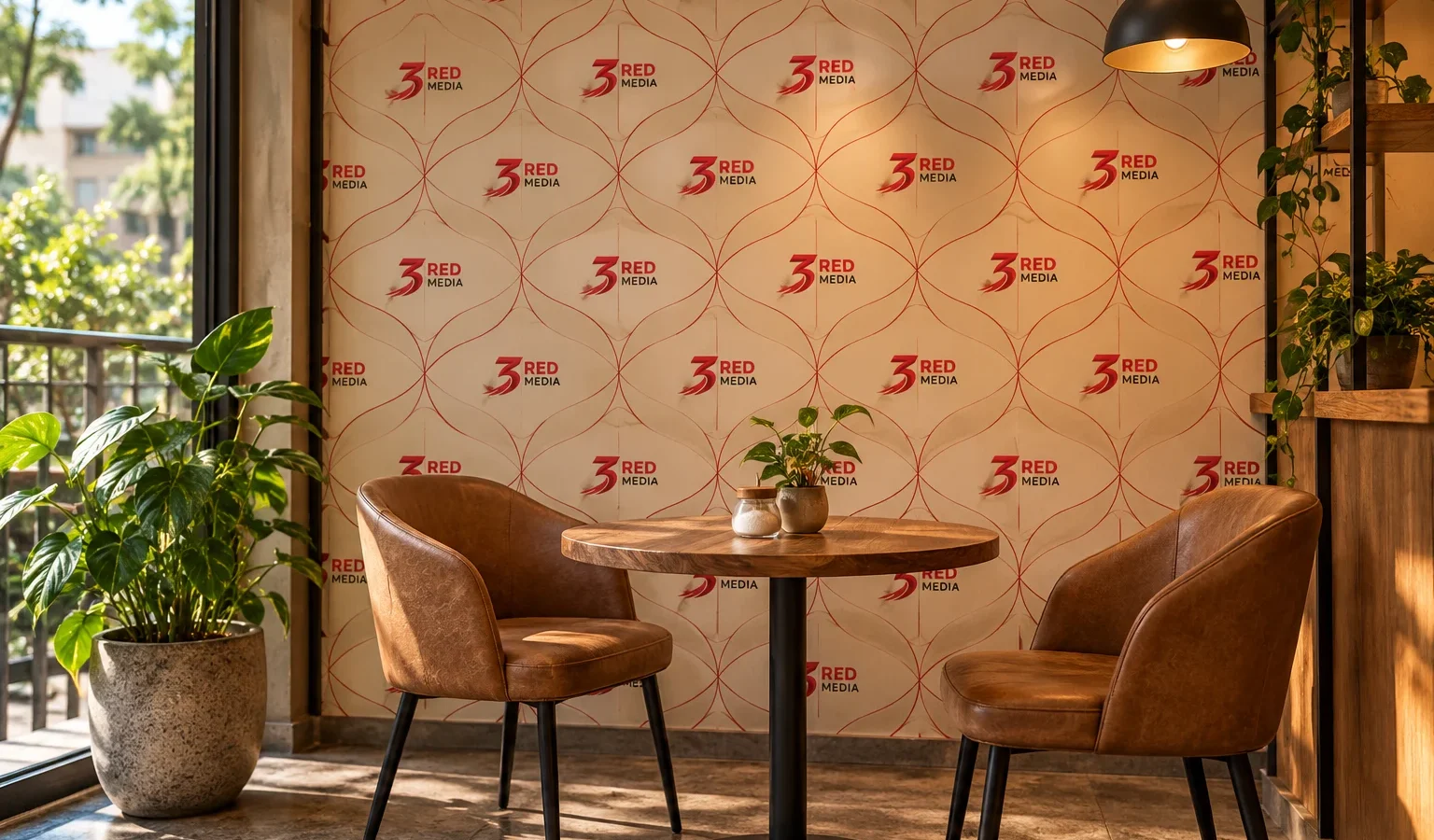
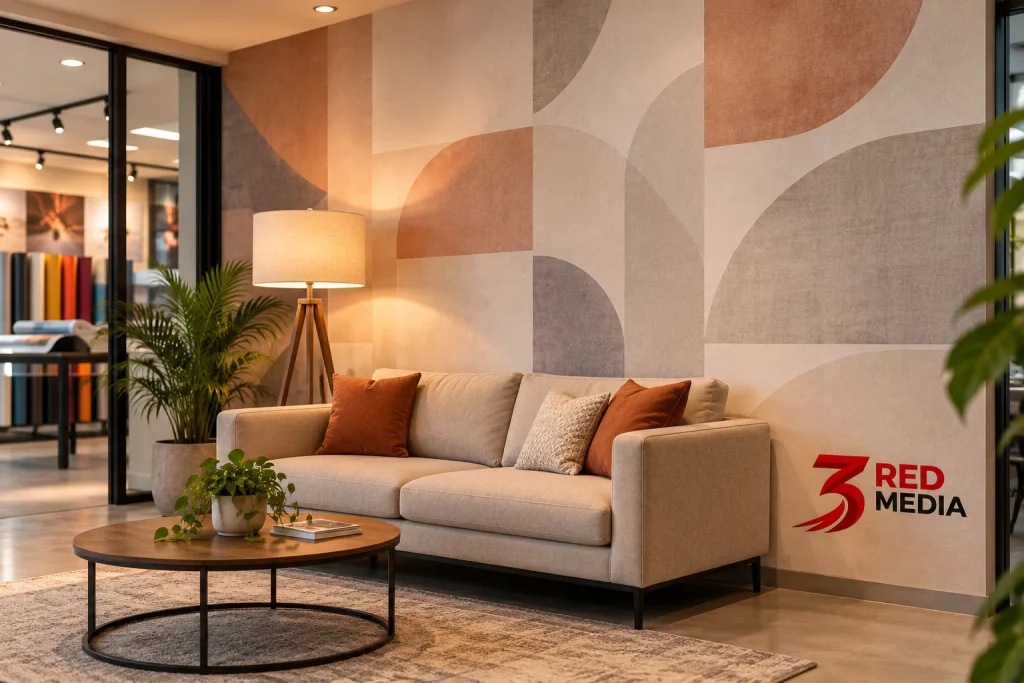
Vinyl wallpaper for furniture can give smooth wardrobe doors, cupboard fronts and tabletops a fresh look without replacing the furniture. The result depends on the surface condition, careful cleaning and how often the piece is handled.
We print vinyl for furniture projects when you share the measurements and design. A digital proof is sent for approval before printing, so you can check the artwork and its placement first.
Can vinyl wallpaper be used on furniture?
Yes, printed vinyl can be applied to many furniture surfaces, especially flat, smooth panels such as wardrobe fronts, cupboard doors and tables. It is a practical way to change the visible finish while keeping the existing piece.
It is not a repair for loose laminate, peeling paint, swollen boards or deep dents. Those defects can show through the vinyl or cause it to lift. Check the panel condition first, and ask us whether it can be arranged for your job if surface preparation or fitting support is needed.
Furniture gets touched, cleaned and bumped more often than a wall. Edges, handles and corners take extra wear, so a design that can be trimmed neatly around fittings is usually easier to live with.
Which furniture surfaces take vinyl: laminate, wood or metal?
A clean, smooth laminate panel is generally a suitable surface. Painted wood or metal may also take vinyl if the coating is firm, dry and free from oil, dust and loose flakes. Test an inconspicuous area if you are unsure how the existing finish will respond.
Bare, rough or porous wood needs more attention because the surface texture can show through and reduce adhesion. Raised grain, deep grooves and uneven joints make a neat finish harder. Glass is smooth, but furniture with curved edges or shaped panels needs careful planning.
| Surface | What to check before applying | Practical note |
|---|---|---|
| Smooth laminate | No peeling, grease or loose edges | Often suitable for flat doors and panels |
| Painted wood | Paint is firm, dry and smooth | Texture or chips may show through |
| Bare or rough wood | Surface is clean and even | May need suitable preparation first |
| Metal | No rust, oil or flaking coating | Check corners and panel joins |
| Glass | Clean and free of residue | Plan around handles and edges |
For large panels, include the visible area and any returns or side panels in your measurements. Share the width and height in feet and inches, and mention handles, grooves, hinges or existing damage. We can advise on the print area from those details.
How do I prepare a wardrobe door before applying vinyl?
Remove dust and grease with a suitable cleaner, then let the surface dry fully. Take off handles where practical, and clean around the screw holes. Do not apply over dampness, polish residue or cleaning product left on the panel.
Check the door in good light. Fill or repair surface defects using an approach suitable for that furniture material, then make the area smooth and remove all sanding dust. If the existing coating is loose, address it before applying vinyl; sticking over a failing layer will not make it sound.
Measure each door separately because adjacent panels may differ slightly. Note which edge is the hinge side and where handles sit. For a printed pattern, allow for how the image will line up across neighbouring doors, and share a simple sketch or clear reference photos with the artwork.
How do I wrap a wardrobe or door without bubbles?
Start with the panel laid flat if it can be safely removed, or work on a stable door with room to reach its full height. Align the vinyl before exposing much of its adhesive side. Keep the sheet supported and apply it gradually, smoothing from the centre outwards with a clean squeegee.
Work in small sections and use steady pressure. If a bubble appears while applying, lift the vinyl gently back towards that area and smooth it again. Avoid pulling hard, since stretching can distort a printed design and make the edges difficult to align.
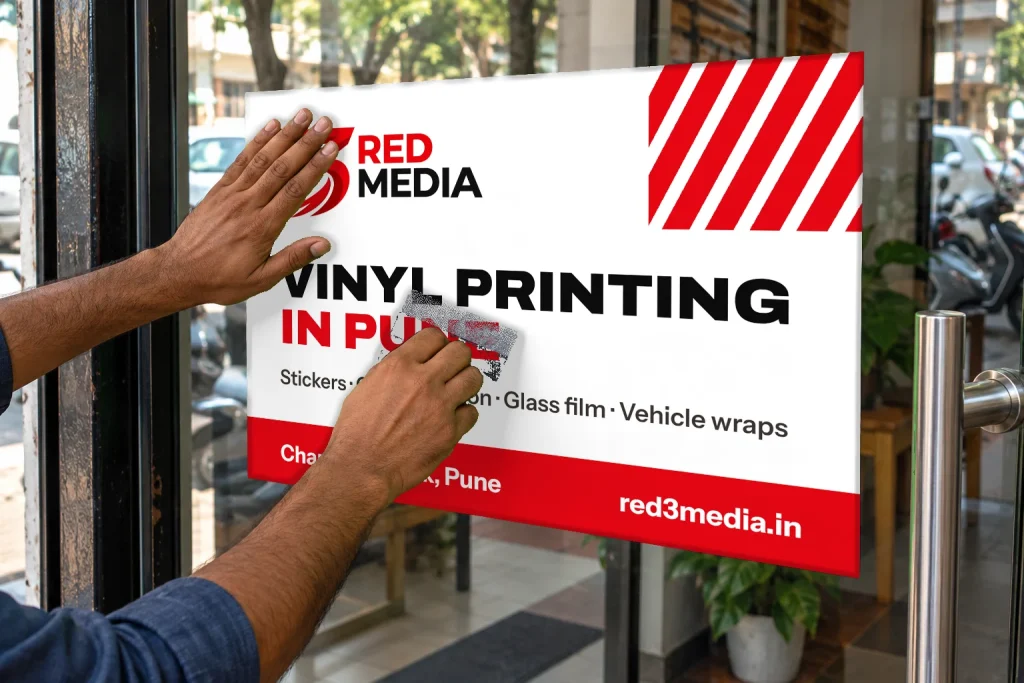
Trim excess material with care, keeping the blade away from the furniture finish. Press edges down firmly, especially around corners and handle cut-outs. If a door has deep grooves, curved profiles or several narrow sections, a flat-panel approach may not suit it; ask us whether it can be arranged for your job.
We print at 3 Red Media in Chandni Chowk, Pune. Send measurements and artwork details through the quote form, and we will share a digital proof for your approval before printing. For artwork setup, see our guide to sending print artwork.
What designs suit wardrobes, doors and tabletops?
A wardrobe front has a broad viewing area, so a calm texture, repeat pattern or image with a clear focal point can work well. If the wardrobe has multiple doors, consider how the design will cross the gaps and whether handles will interrupt key parts of the image.
For doors, simpler patterns are easier to align around hinges, locks and handles. Tabletop designs should suit the room and the way the table is used. A surface used for meals, craft work or frequent cleaning will experience more wear than a decorative cabinet front.
Browse our vinyl wallpaper printing options for ideas on printed finishes. If the project also includes nearby walls, our wall graphics page covers wall applications. For other vinyl uses, see vinyl printing in Pune.
How long does vinyl on furniture last with daily use?
There is no single lifespan for furniture vinyl. It depends on the surface preparation, application, handling, cleaning routine and exposure to heat or sunlight. Wardrobe fronts that are opened by their handles usually see different wear from a tabletop that is wiped many times each day.
Edges and corners tend to show wear first, particularly where hands catch a lifted edge or objects scrape against it. Use a soft cloth and a cleaner suitable for the vinyl and underlying furniture. Avoid abrasive pads and harsh scraping, and follow any care guidance provided with the material.
Keep expectations practical for furniture used heavily. Printed vinyl can refresh the visible surface, but it does not protect the furniture from impacts, water entering joints or damage beneath the finish.
Can furniture vinyl be removed later?
It may be possible to peel vinyl from furniture later, but removal depends on the adhesive, time in place and condition of the finish underneath. Older paint, weak laminate or damaged coatings may lift along with the vinyl. Try a small hidden area first and work slowly.
Do not use sharp tools against the panel or apply heat without considering the furniture material and its coating. If adhesive residue remains, use a cleaning method suited to the surface and test it in a hidden spot. If the panel finish is valuable or delicate, get suitable advice before removal.
For a job quote, share the furniture type, panel measurements, artwork and a photo of the surface through the 3 Red Media quote form. We will send a digital proof for approval before printing.