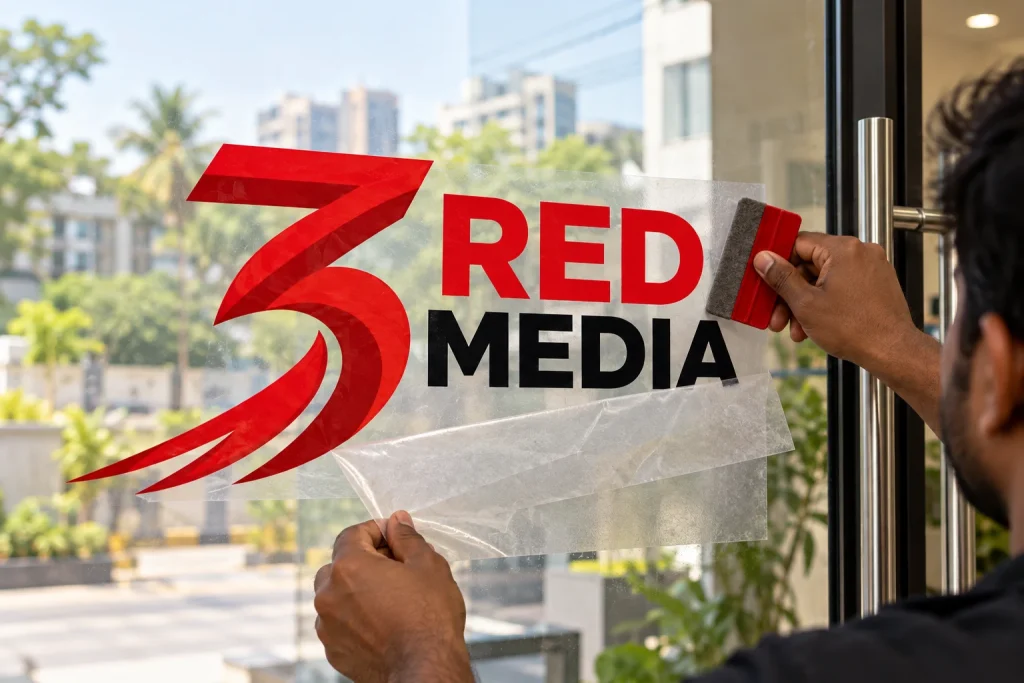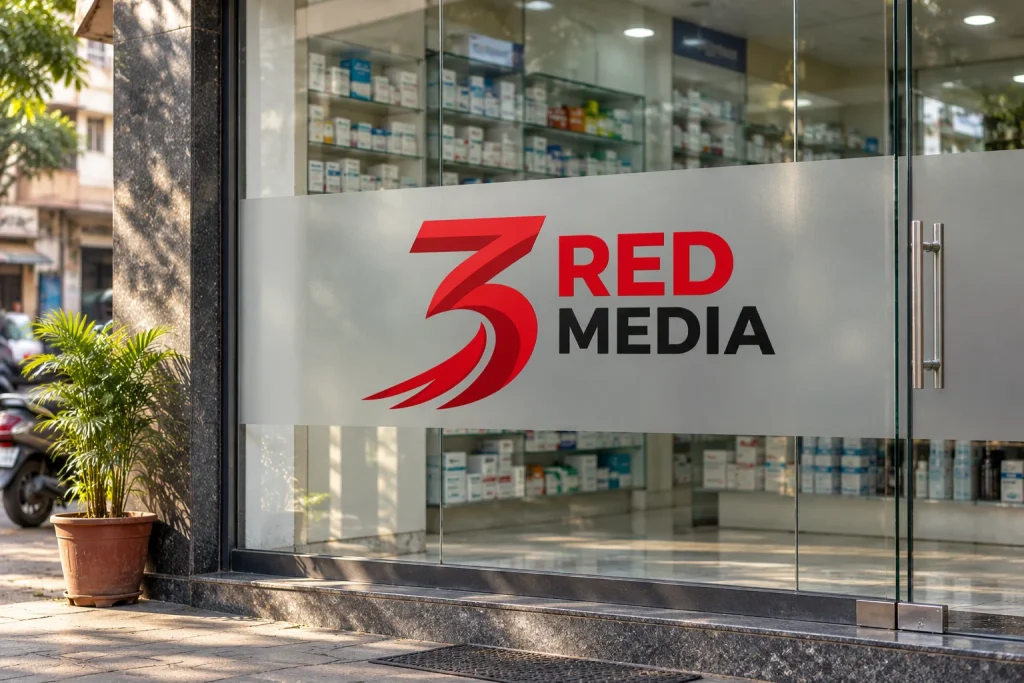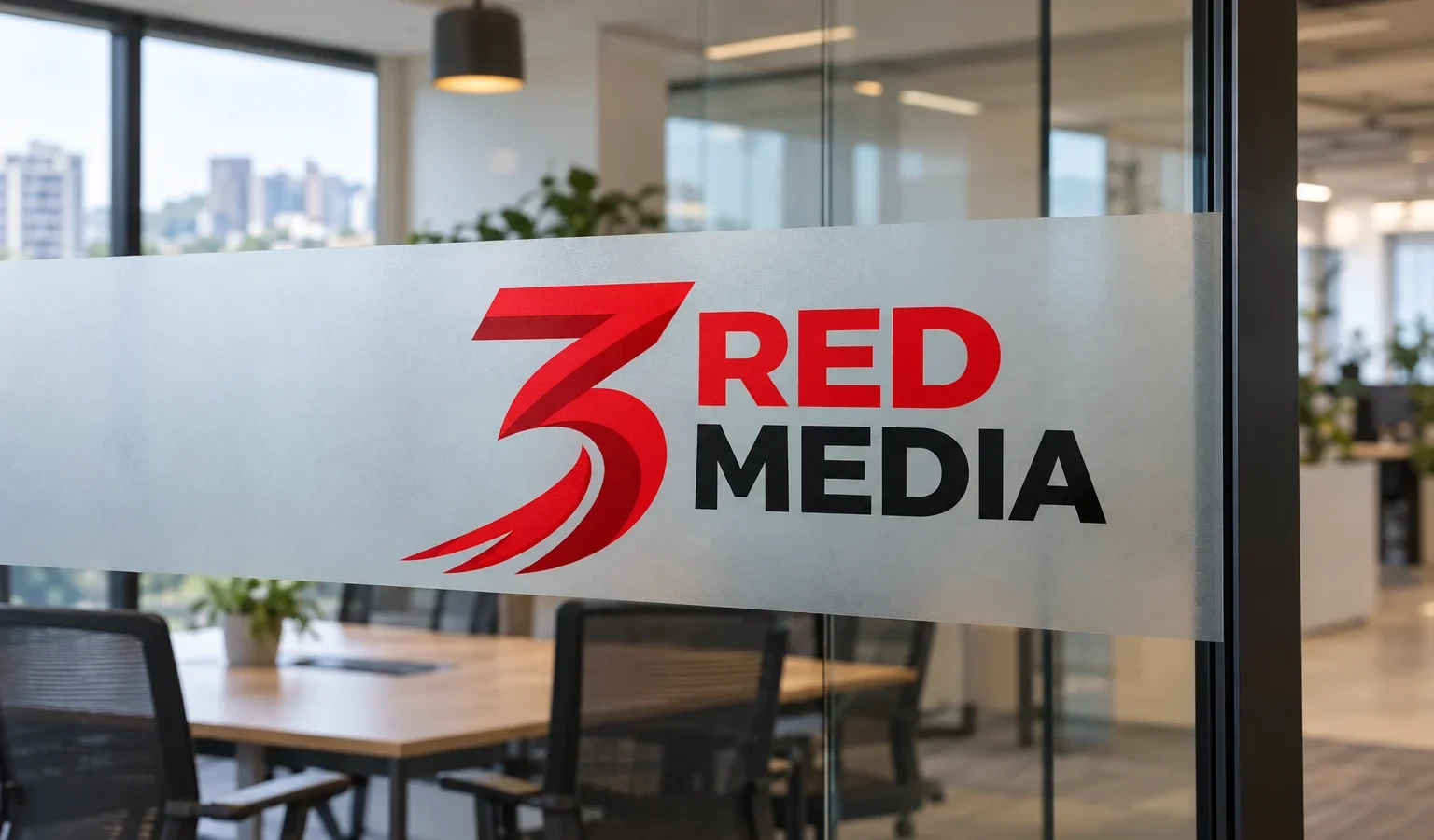
Glass manifestation is a visible band, pattern or logo placed on clear glass so that people notice the pane before they walk into it. In offices it usually means frosted film or cut vinyl at eye level on glass doors, partitions and full-height panels. The same mark can carry a company name, so one strip of film does a safety job and a branding job together.
The term comes from glazing safety guidance, where marking a clear pane so that it can be seen is called manifesting it. The need is greatest with clean, well-lit glass, because the cleaner the pane, the less of it you notice.
What is glass manifestation, exactly?
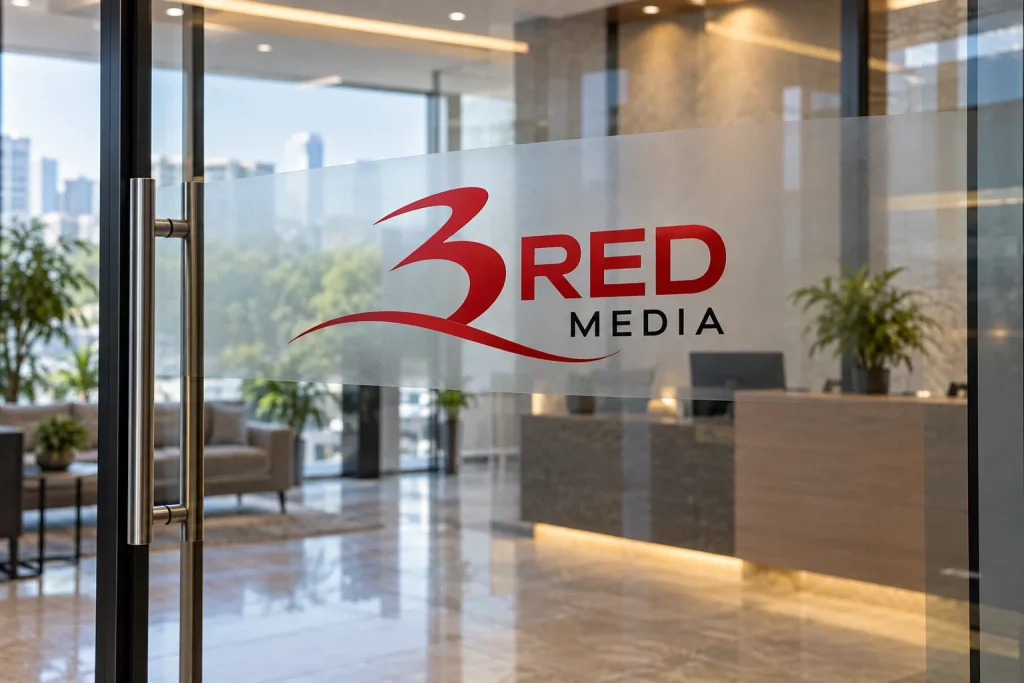
Manifestation covers any mark that makes a transparent pane obvious: a continuous band, a row of dots or squares, lettering, or a logo repeated along the glass. It is placed around eye level and can be permanent, as with etched glass, or applied, as with film and cut vinyl.
It is not privacy film, which hides what is behind the glass, and it is not safety glass, which is made to break less dangerously. One pane may need all three. Indian glass-safety guidelines are plain on this point: marking a pane never replaces toughened or laminated glass where the building calls for it.
Why do glass doors and partitions need manifestation?
People miss clear glass for ordinary reasons. The floor and ceiling carry on unbroken on both sides, a frameless door shows no handle until you are close, and a bright lobby reflects as much as it reveals. The people most likely to miss a pane are those not looking for it: someone carrying boxes, a visitor reading a phone, a child running ahead of a parent.
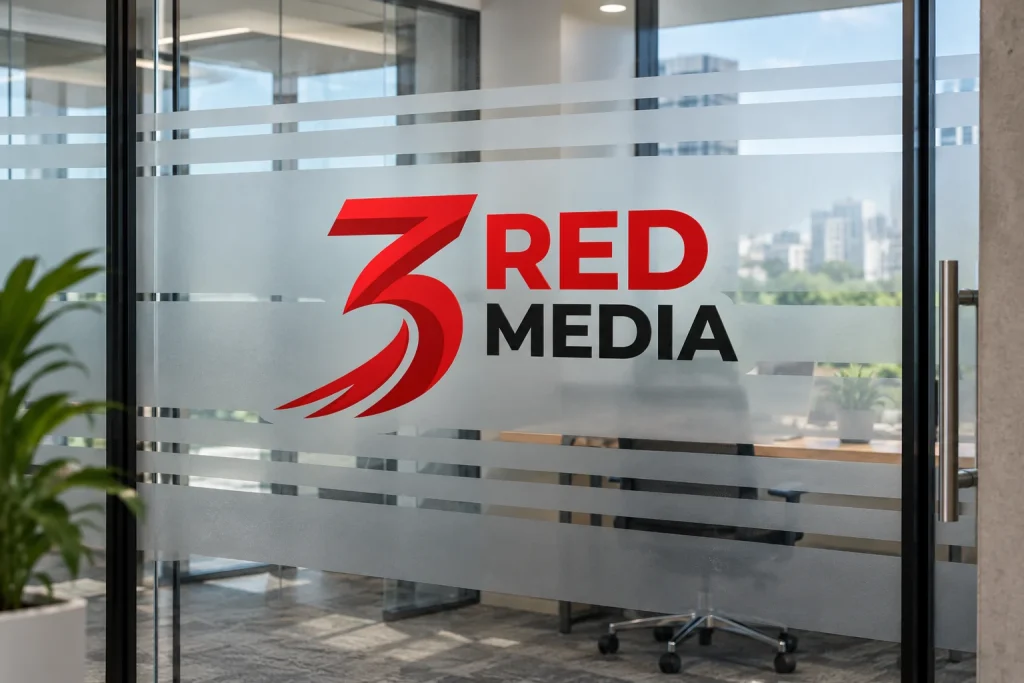
A collision hurts the person and can crack the glass, so careful offices mark their glass before an accident forces the question. These are the usual trouble spots.
| Glass | Why it gets missed | Common mark |
|---|---|---|
| Frameless entrance door | No frame or handle in view, lobby reflected in it | Logo or band at eye level, plus a push or pull mark |
| Full-height corridor partition | Floor and ceiling look unbroken | Band or dot pattern along the whole run |
| Glass wall at a lift lobby or landing | People walk fast and look at their phones | Wide band, sometimes repeated lower down |
| Side panel next to a shop door | Looks like another way in | Large lettering or a bold logo |
| Clinic reception glass | Visitors who are anxious, unwell or watching children | Frosted band with the name cut into it |
What heights and patterns are commonly used for manifestation?
The Indian guidelines on using glass in buildings for human safety (published by the Confederation of Construction Products and Services, third edition, 2013) describe the marking as an opaque band at least 20 mm high. Its top edge should be no lower than about 2 ft 4 in (700 mm) from the floor and its bottom edge no higher than about 3 ft 11 in (1200 mm). The mark must be easy to see against whatever lies behind the glass, and a pattern is accepted instead of a band.
That is a minimum, not a finished design. Many offices mark the glass nearer eye level, roughly 4 ft 6 in to 5 ft 6 in up, and some designers add a second line lower down so smaller visitors meet a mark too. The architect’s drawing sets the exact height, and every pane on a floor should follow the same line.
Which manifestation designs look good in an office?
| Design | Look | Suits |
|---|---|---|
| Plain frosted band | Calm and formal | Meeting rooms, cabins, boardrooms |
| Dots that thin out towards the top | Soft and modern | Reception glass, open-plan partitions |
| Horizontal lines of mixed widths | Light, architectural | Long corridor runs |
| Small logo repeated along the glass | Brand-led | Entrance doors, lift lobbies |
| Cut room names or numbers | Practical | Meeting-room doors |
The designs that age well are restrained: one pattern per floor, the same height on every pane, and the band lined up with the door handles so the eye reads a single line. Bold shapes clean better than hairlines, which can lift at the edges. Reception glass often borrows from the wall artwork described under corporate office branding.
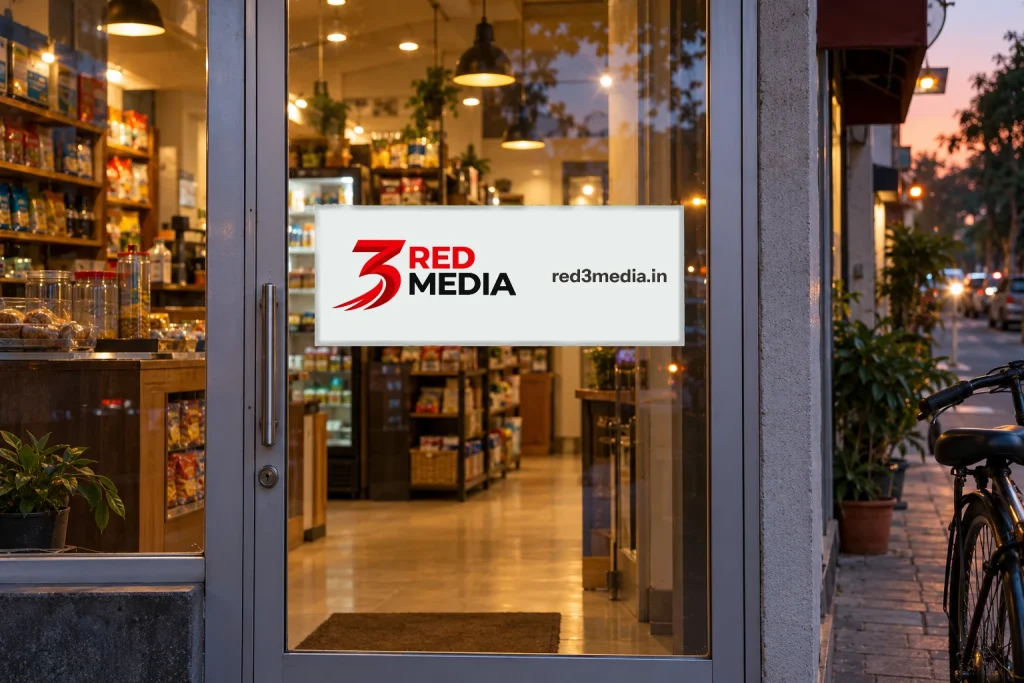
Is glass manifestation required by building rules?
For new buildings, the National Building Code of India 2016 carries a section on glass and glazing (Part 6, Section 8) that deals with making clear glass visible and with where safety glass is needed. The Code is a model document that applies in law where a state or city has taken it into its building rules, and landlords, fit-out manuals and architects often ask for more than the minimum.
So whether your own office must have manifestation depends on its approvals and its fit-out terms. Ask your architect or building management before you order, and give the film supplier their drawing. In clinics and hospitals, where visitors may be unsteady or unwell, marking the glass is sensible whatever the rule says; the hospital signage page looks at glass in those buildings.
Which material is used for manifestation: frosted film or cut vinyl?
| Material | Look | Removable | Good to know |
|---|---|---|---|
| Frosted film | Etched-glass finish | Yes | The usual choice for bands |
| Cut vinyl in a colour | Solid, crisp shapes and letters | Yes | Suits logos and room names in brand colours |
| Printed clear film | Full-colour graphics | Yes | Pale colours look faint without a white backing |
| Etching or sandblasting | Permanent frost in the glass itself | No | Done on the glass, not as a film |
The guidelines prefer a permanent mark such as etching, but they allow applied material that is durable and not easily removed, which is where well-fitted film sits. Unlike etching, it peels off when the lease ends. At Chandni Chowk in Pune, 3 Red Media cuts frosted glass film and vinyl lettering to size and design in-house.
How do I apply manifestation on existing glass?
- Measure each pane and mark one level line across every pane on the floor, so the band reads as a single stripe.
- Choose the face of the glass. The inside face keeps film away from rain splash and road dust; say which side people approach from, so a logo reads the right way round.
- Clean the glass with a blade-free cloth and remove old stickers and glue.
- Wet the glass with a light soap solution, set the film in place and press it out with a squeegee from the middle to the edges.
- Trim at the frame, then leave the pane alone for a few days while the last moisture dries.
Pane sizes and a few photos sent through the quote form get you a proof of the band on your own glass before anything is printed.