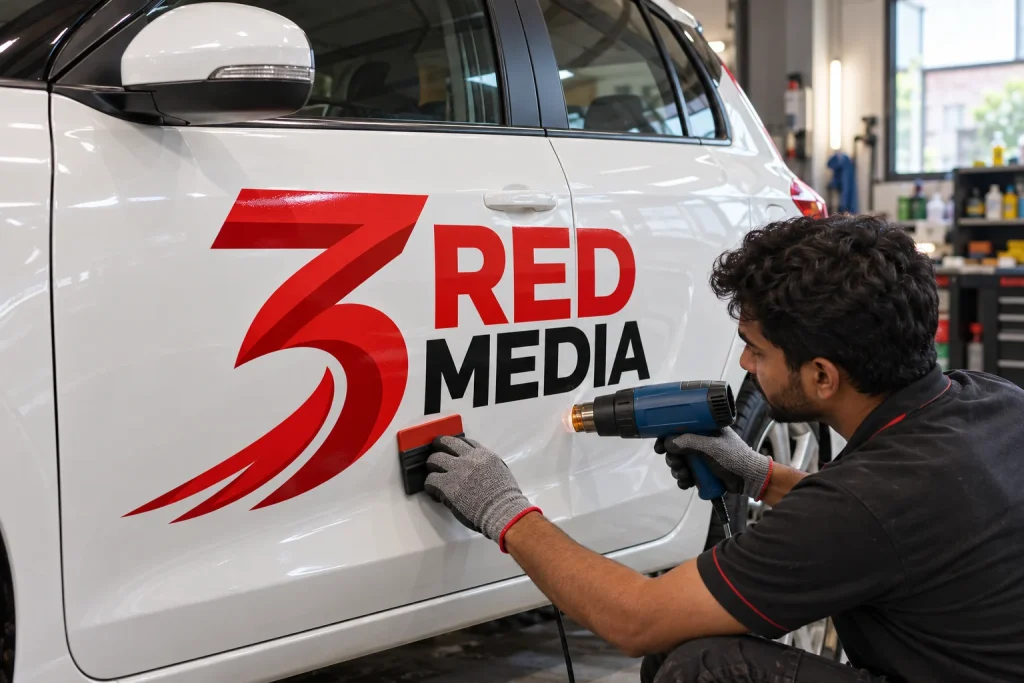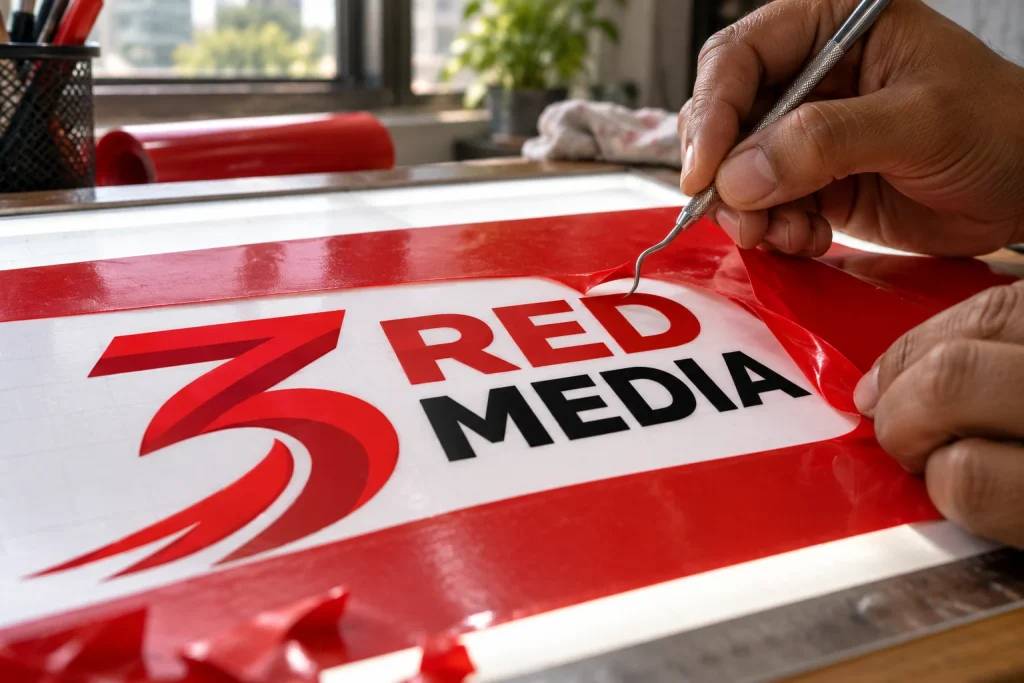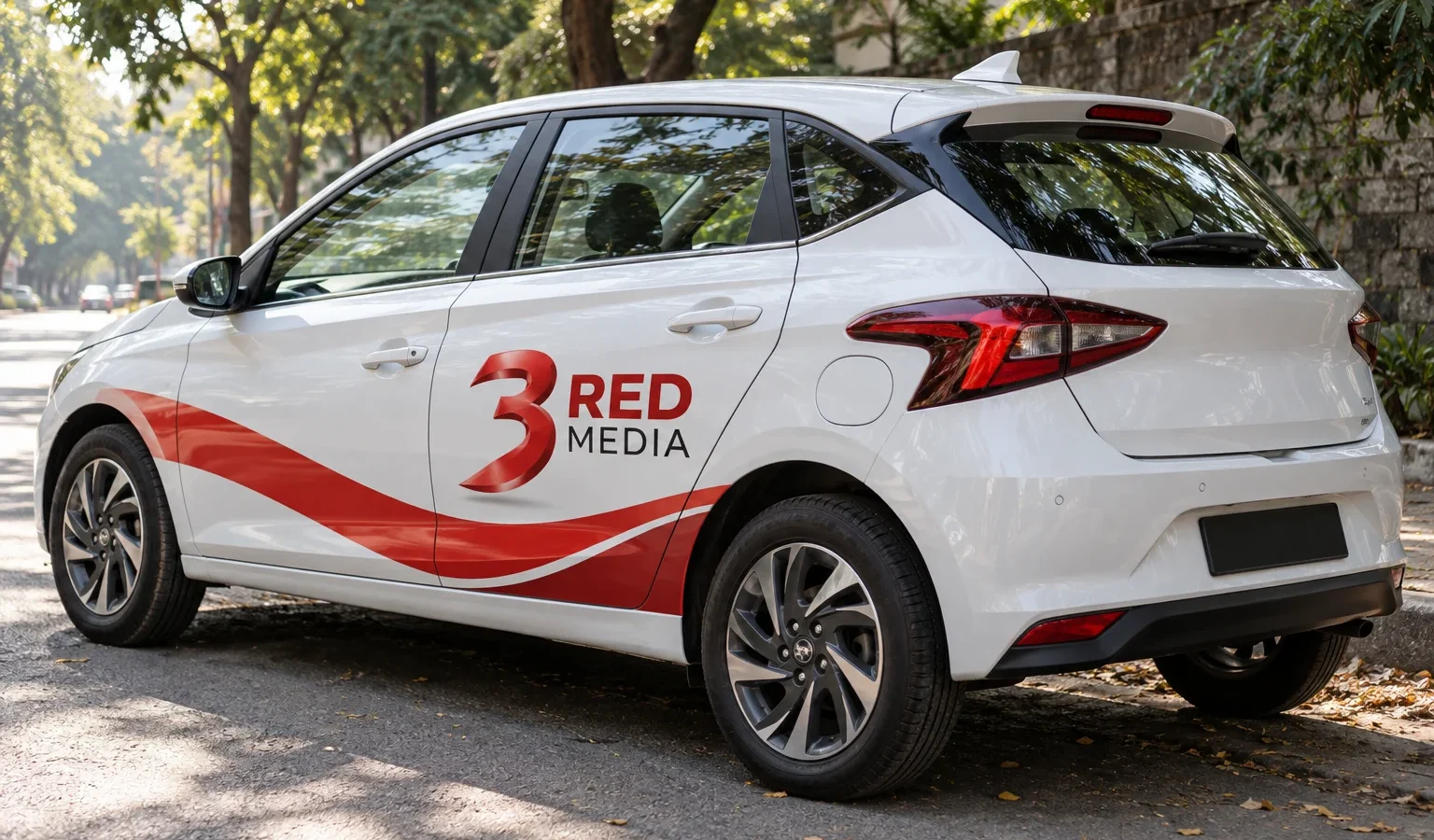
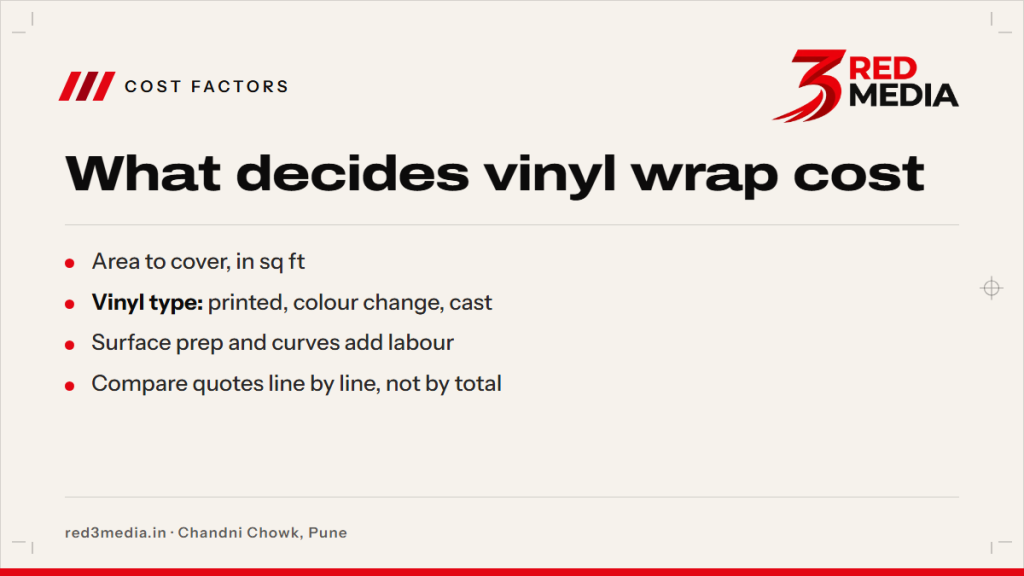
Vinyl wrap cost comes down to three things: how much film the job uses, which kind of film it is, and how many hours go into preparing and fitting it. One Indian price guide updated in April 2026 puts a partial wrap on a car at roughly ₹8,000 to ₹25,000 and a full gloss colour change on a hatchback at ₹60,000 to ₹90,000, which shows how wide the spread is. Those are published market ranges, not a quote from any shop.
An average price tells you little here, so the sections below take a quote apart and show where the money goes.
How much does a vinyl wrap cost?
Published guides give ranges, not rates, and they assume premium film fitted by a professional. This table comes from one Indian guide updated in April 2026.
| Job | Range in that guide | What it assumes |
|---|---|---|
| Partial wrap: roof, bonnet, mirror caps | ₹8,000 to ₹25,000 | Colour change film on a few panels |
| Full gloss colour change, hatchback | ₹60,000 to ₹90,000 | Premium film, whole body |
| Full gloss colour change, SUV | ₹90,000 to ₹1,30,000 | Same film, more area |
| Chrome or metallic finish, hatchback | ₹1,20,000 to ₹1,80,000 | Specialty film |
| Colour-shift finish, hatchback | ₹1,50,000 to ₹2,50,000 | Specialty film |
Real quotes in Pune land above and below these figures, because film, coverage and fitting differ from shop to shop. The ranges also leave out lines that matter, such as paint repair, removing an old wrap, GST and parts-off work, so read each figure as part of a quote and not the whole of one. Printed graphics follow another logic. They are priced per sq ft of print, using the width times height sum in the vinyl printing price guide, while a whole-car wrap is usually quoted as one package for the vehicle.
What decides the cost of a vinyl wrap: area, material, finish?
- Area. Film is bought by roll length, so overlaps at curves and offcuts mean more is bought than is stuck. Supplier guides range from about 14 to 22 metres of 1.52 m wide film for a hatchback, roughly 230 to 360 sq ft.
- Film type. Cast film follows curves and costs more than calendered film, which suits flat panels.
- Finish. Gloss and satin colours are the base. Chrome, brushed metal, carbon texture and colour-shift films cost more.
- Print and laminate. A printed wrap adds ink, a protective laminate and design time that a plain colour roll does not need.
- Coverage. Partial or full, and whether door edges and jambs are included.
- Film maker. Premium films usually cost more, and the gap tends to show later in how well edges hold and how cleanly the film peels off.
Pune’s sun adds a practical point. A car that sleeps in the open all year takes far more UV than one kept in a garage, so a cheap roll that fades in two summers can cost more than a better film bought once. Clear paint protection film is a different product again, and none of the figures here cover it.
How do labour and surface preparation change the price?
On a full wrap, fitting is a large share of the price, and it grows with every part that has to come off. Removing bumpers, door handles, mirrors and lights lets the fitter tuck film into edges where it will not lift, and it takes hours. A quote that leaves parts on can look cheaper and show its edges sooner.
- Paint condition. Vinyl follows whatever is under it, so dents, rust and peeling lacquer are repaired first, and fresh paint needs weeks to cure.
- Contamination. Wax, tar and polish residue stop the adhesive from gripping, so every panel is washed and wiped down before film goes on.
- Shape. A flat van side is quick. Bumpers with sensors, deep recesses and mirror housings take far longer for the same area.
- Work area. Fitting needs a shaded, dust-free bay, and in the monsoon a dry one.
- Old film. Stripping an earlier wrap or stickers and cleaning off the adhesive is extra work, and so is taking the new wrap off at the end.
A full car often takes a few working days, a door panel a few hours, so ask how long yours will stay with the fitter.
Printed wrap or colour change vinyl: which costs more?
Neither is always dearer, because the price follows the area covered and the finish chosen. Colour change film is a roll already dyed to a gloss, matt, satin or metallic finish, so there is no ink step; you pay for the film and the hours to fit it over every panel. A printed wrap adds design time, ink, a laminate and cutting, which pays off when you want a logo, a pattern or a livery. It also needs a film made for printing on curves, with a laminate to match, and that costs more than ordinary flat sign vinyl.
That is why a full printed livery often costs more than a plain gloss colour change, while printed doors and a rear panel on a delivery van cost far less than recolouring the whole vehicle. Van and bus graphics are usually priced by the sq ft of printed panel, as the vehicle branding page explains.
How does the cost differ between a car, a bike and furniture?
A car is mostly film plus days of fitting, and the total climbs steeply with size, which is why the SUV rows in the table sit above the hatchback rows for the same film. Door jambs, the inside edges you see when a door opens, can add a day if they are included.
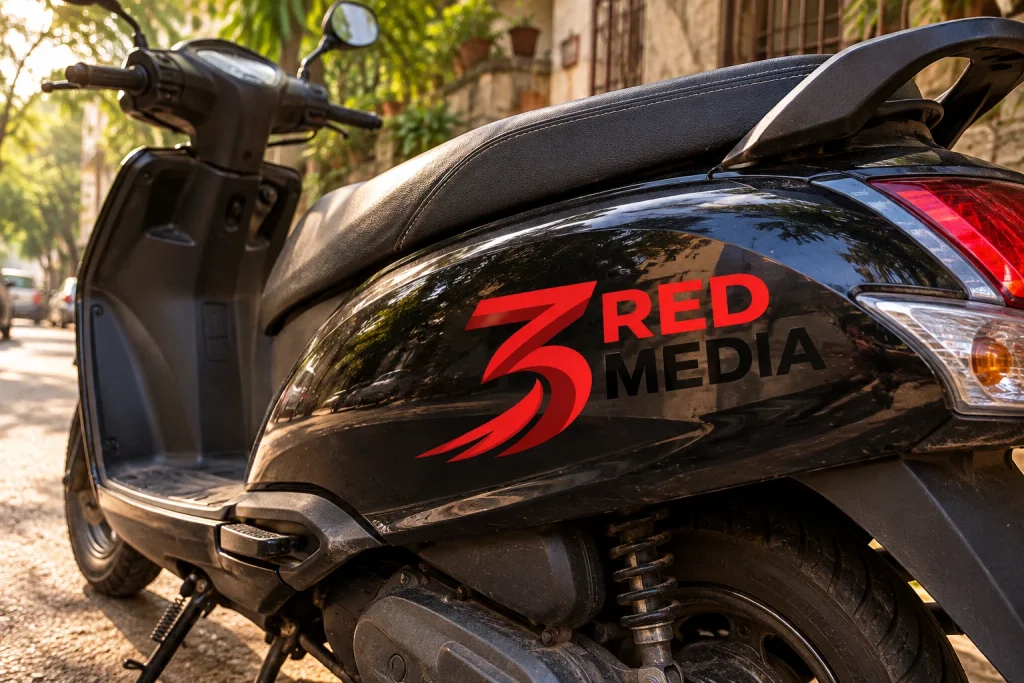
A bike has little area, but the panels are small and curved: tank, fairing, mudguard. Film cost is low and fitting is fiddly, so the price per sq ft looks high even when the total is modest. Partial graphics sets are the usual choice.
Furniture and doors are flat jobs on interior-grade film, and they go quickly, but the surface sets the price. Grease on a kitchen door, a peeling laminate edge or rough veneer needs prep, and handles and corners take time. Flat work is priced much like wall vinyl, by the sq ft. A kitchen cannot travel to a workshop, so ask whether fitting on site is part of the offer.
How do I compare two vinyl wrap quotes properly?
Ask both shops to write the quote in lines. A bare total hides the differences that matter.
| Ask for | Why it changes the total |
|---|---|
| Film name and finish | A premium cast film and an unbranded roll can both be sold as gloss black |
| Panels covered | A full wrap may or may not include door edges, jambs and the roof |
| Parts removed or left on | Removal costs hours; leaving parts on speeds the job and shows edges |
| Print and laminate | Needed on printed work, not on plain colour film |
| Prep and paint repair | Either fixed inside the quote or left to surprise you later |
| Fitting place and days | A shaded bay and the number of days the car stays |
| GST and after-care | Both change the final bill, and so does what happens if an edge lifts |
Then divide each total by the area covered to see a rate per sq ft, and compare that figure, not the headline number. As a made-up example, ₹70,000 for 230 sq ft of film works out to about ₹304 per sq ft, while ₹64,000 for 190 sq ft is about ₹337. The cheaper total carries the dearer rate, and the shorter film list may mean fewer panels or no door edges.
How can I reduce vinyl wrap cost without hurting quality?
- Wrap fewer panels. A roof, bonnet or side stripe changes the look for a fraction of a full wrap.
- Pick a standard gloss or satin colour. Chrome and colour-shift finishes carry a premium in the guide above.
- Keep the design simple. Fewer printed panels and colours mean less design time and ink.
- Batch the work. Several vehicles with one layout share the design time, which is how fleets bring the cost per vehicle down.
- Repair paint first. A small repair before wrapping costs less than redoing a wrap that shows a dent.
- Buy the film once. A grade that survives open-air parking costs less over the years than one replaced early.
- Book a slot, not a rush. Urgent work depends on size and the queue, and the ready time is confirmed with you.
3 Red Media prints vehicle vinyl at its Chandni Chowk unit in Pune, and the car and bike wrap page shows the kinds of job. For a quote built in lines you can compare, send the make, model, photos of every side and the panels you want covered through the quote form.