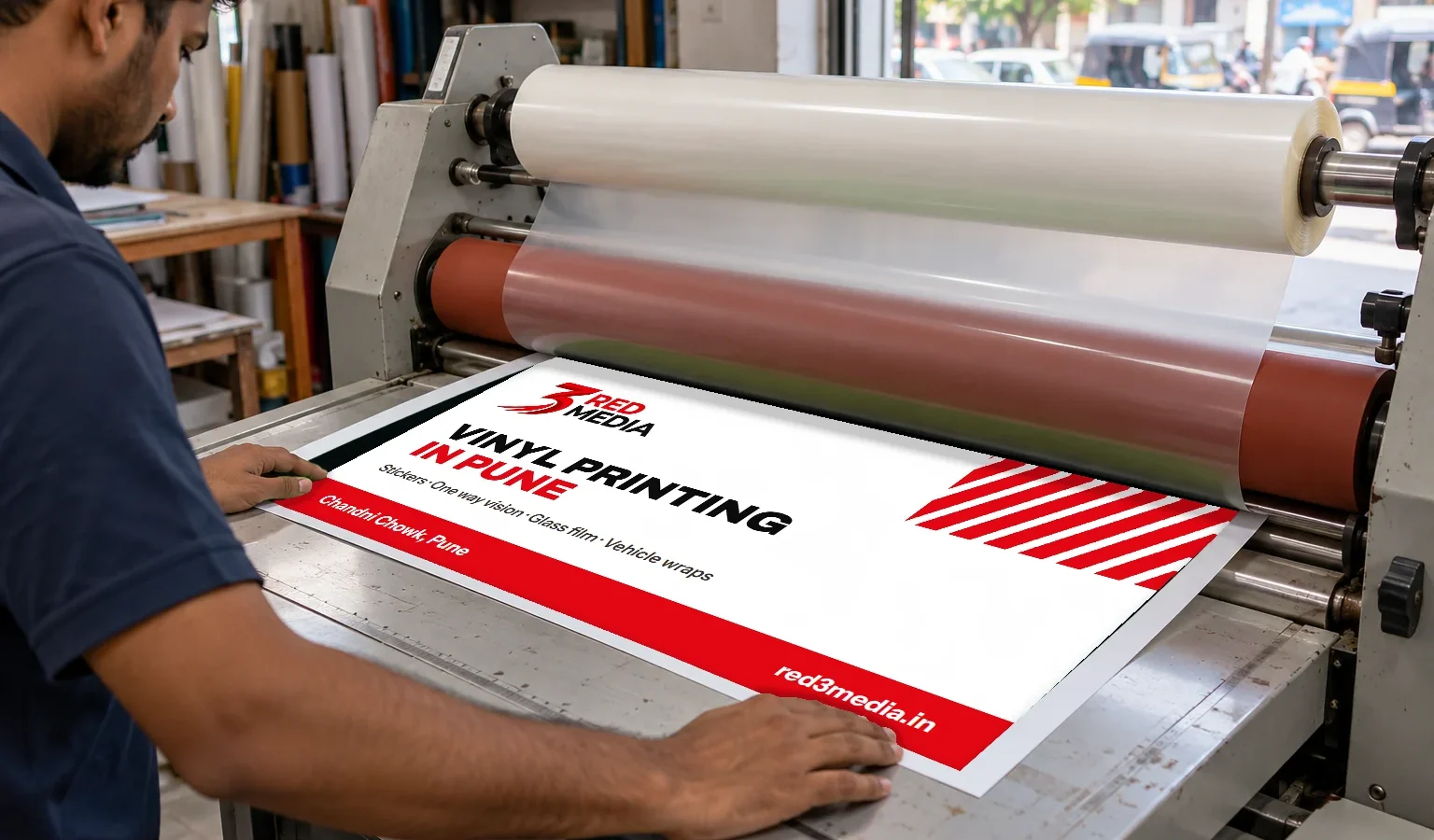
Vinyl lamination types come down to three everyday finishes: gloss, matt and textured. Gloss deepens colour but shows glare and fingerprints, matt gives a soft look with less glare, and textured laminates such as anti-skid are made for floors. Any of them adds a protective layer over the ink, which is why outdoor prints, wiped surfaces and walked-on graphics are laminated.
Lamination is a clear adhesive film pressed over the finished print. It is the simplest protection a vinyl job can have, and the finish you pick changes how the print looks under the lights where it will hang.
What is vinyl lamination, and what are the vinyl lamination types?
A laminate is a thin clear film with its own adhesive. A roll laminator presses it onto the print under even pressure, normally without heat, so the vinyl does not stretch. The film does three jobs: it shields the ink from scratches and wiping, it filters part of the sun’s ultraviolet on outdoor grades, and it sets the surface finish.
It goes on after the ink has dried fully. If it goes on too soon, solvent trapped underneath can raise bubbles days later, which is why a rushed job is not always a good one.
What is the difference between matt and gloss lamination?
| Finish | Look | Suits | Watch for |
|---|---|---|---|
| Gloss | Wet shine, deeper colour | Photos, bright logos, well-lit walls | Glare, fingerprints |
| Matt | Soft and flat, fewer reflections | Offices, clinics, glass, walls under tube lights | Slightly less colour punch |
| Anti-skid | Fine grain you can feel | Floor graphics | Dirt settles in the texture |
In practice, choose gloss for pictures that people look at straight on, and matt wherever tube lights, windows or camera flashes would bounce off the surface. Some suppliers also stock a satin finish that sits between the two.
Think of the room, not the print. A clinic corridor under white tube lights suits matt, because gloss mirrors the tubes back at the viewer. A print beside a window can pick up the sky in a gloss finish, so matt keeps it readable at every hour. Gloss earns its place where lighting is soft and the picture is the point.
What is textured or anti-skid lamination?
Among vinyl lamination types, anti-skid is the odd one out. It has a fine grain moulded into the surface, which gives shoes grip and protects the print from scuffing. That is why floor graphics use it and plain glossy vinyl does not. The texture slightly softens the picture and holds dirt, so keep floor designs bold, with short words and simple shapes.
Other textures exist for decoration, such as canvas-grain and brushed finishes for art prints. They are chosen for looks, not grip, and are not for floors. How the anti-skid build works in practice is covered under floor graphics.
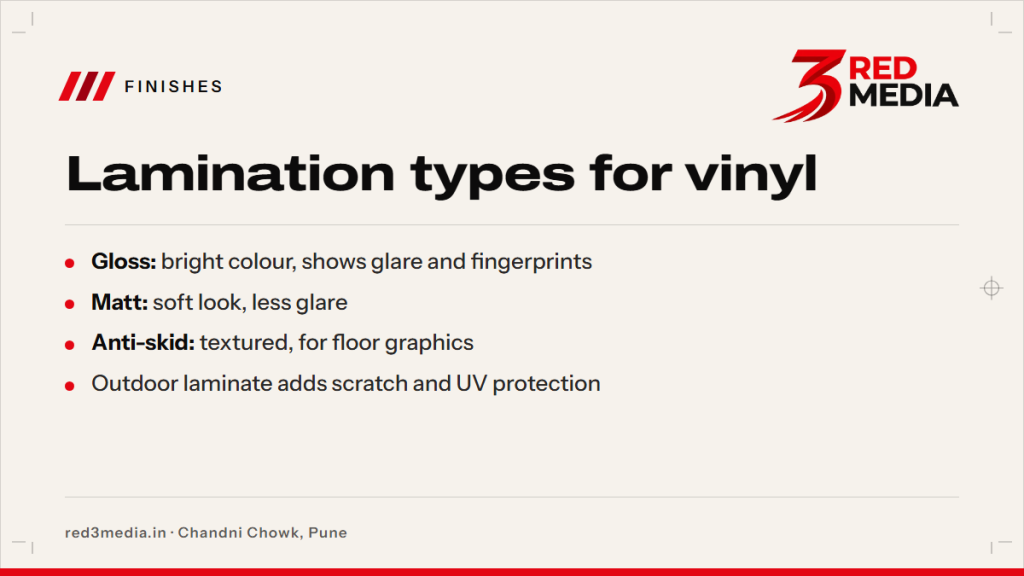
Which of the vinyl lamination types protects prints outdoors?
Pick a laminate sold for outdoor use, with UV inhibitors, in either gloss or matt. The grade matters more than the finish: a basic indoor laminate on a west-facing window can yellow and crack long before a proper outdoor film does.
A laminate that overhangs the print edge slightly seals it, which stops water creeping underneath. On vehicles, the laminate must stretch with the film, so a conformable type goes with vinyl made for curves; a stiff laminate on a curve lifts at the edges.
Pune adds two stresses, summer sun on south and west faces and monsoon water at the edges. Laminate helps with both, but only if the edges are pressed down and the surface was clean. Typical outdoor life is covered in how long vinyl lasts outdoors.
Three questions to put to the printer before an outdoor job:
- Is the laminate rated for outdoor use, with UV protection?
- Does it suit the vinyl underneath, conformable with cast film and standard with standard film?
- Will the laminate overhang the cut edge, and who presses the edges down after fitting?
Does lamination change colours?
A little, and vinyl lamination types differ most on exactly this point. Gloss lifts saturation and makes blacks look deeper. Matt adds a faint haze that lowers contrast, so blacks turn slightly grey and bright colours lose a touch of punch. Neither moves a hue enough to matter on most logos, but a brand colour that must match exactly should be checked on a proof or a small laminated sample held where the print will hang.
Photographs feel the difference most. Gloss makes a picture glow, though under tube lights it can bounce so much light that the picture is hard to read, and that is why many walls get matt anyway.
Can lamination be done after printing on any vinyl?
| Vinyl | Laminate? | Note |
|---|---|---|
| Standard printed vinyl | Yes | The usual choice for stickers and signs |
| Cast vinyl for curves | Yes | Use a laminate that follows curves |
| One way vision | Special type only | Needs a laminate made for perforated film |
| Frosted film | Not laminated | The finish is the product |
| Reflective film | Check first | An ordinary laminate can dull the effect |
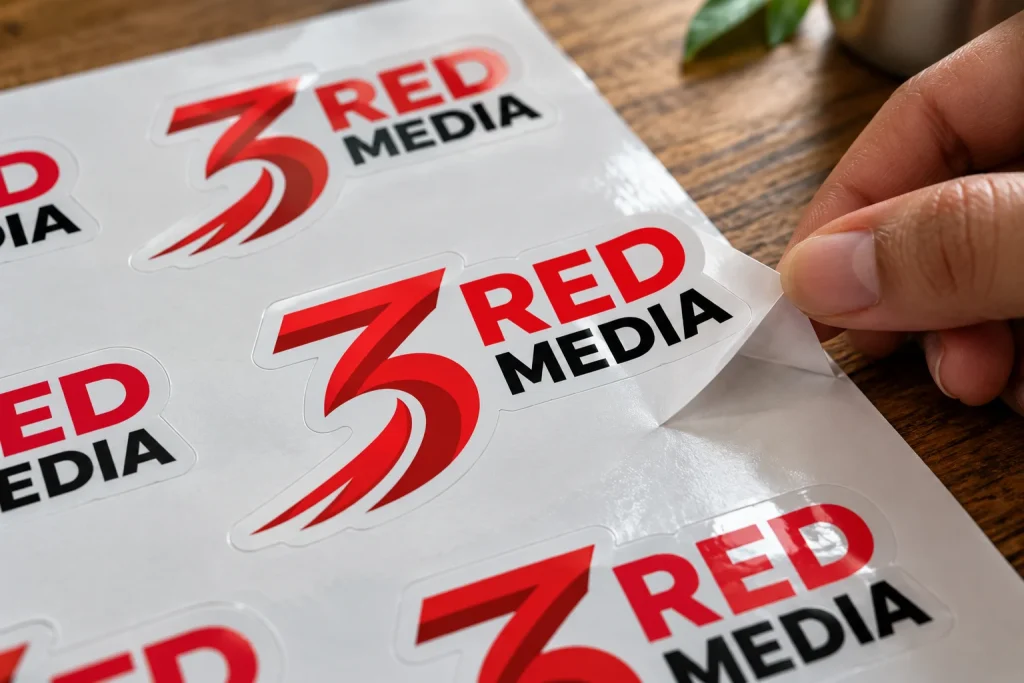
All the vinyl lamination types go on stickers in the same order: the whole sheet is laminated before it is cut, so vinyl and laminate share one clean edge, as described under vinyl sticker printing.
3 Red Media laminates printed vinyl at its Chandni Chowk unit in Pune, in gloss or matt, with anti-skid for floors. Tell the printer where the print will hang, the lighting and whether it will be touched or walked on through the quote form, and the finish is suggested with the proof. The full range is on the vinyl printing page.